Round Jewelry Box SVG: A Designer’s Stitch Review
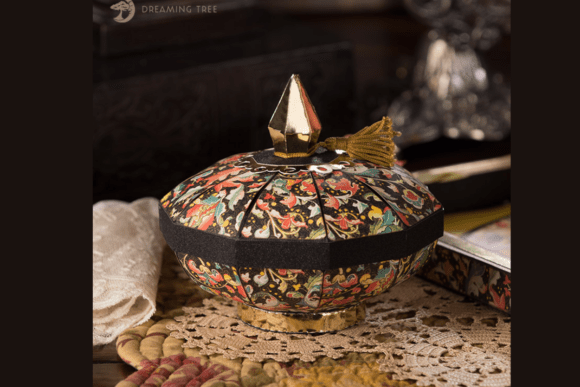
As an embroidery digitizer and product reviewer, I often see files labeled for paper crafting that possess a structural elegance begging to be translated into thread. The Round Jewelry Box SVG is technically categorized as a 3D SVG for paper assembly, but when I evaluate its lines and geometry, I see immediate potential for textile adaptation. Its domed shape, ornate patterned panels, and faceted topper offer a vintage charm that translates surprisingly well into a machine embroidery design. However, moving from a digital cutting file to a stitched reality requires careful consideration of stitch density, fabric texture, and structural integrity.
Translating Paper Geometry to Thread
My first impression of this design was its intricate balance. In the world of Objects and 3D SVG files, precision is paramount. For embroidery, that same precision dictates whether a design puckers or lays flat. The ornate patterned panels suggest a high level of detail that would traditionally rely on satin stitch borders and complex fill stitch interiors. As a designer, my immediate concern is how these geometric facets will behave on fabric. Unlike paper, which holds a rigid crease, fabric has drape and bias. To successfully adapt the Round Jewelry Box SVG for needlework, one must visualize the "facets" not as folds, but as distinct color blocks or textured regions defined by running stitch outlines.
The vintage aesthetic inherent in this file makes it a strong candidate for heritage-style projects. It does not feel like a modern, minimalist graphic; rather, it carries the weight of antique craftsmanship. This mood suggests specific thread colors—muted golds, dusty roses, deep teals, or sepia tones—rather than bright primary colors. When reviewing this for real-world application, I am looking for a design that respects the source material while acknowledging the limitations of thread tension.
Real-World Application: The Heirloom Tote Bag Scenario
To truly test the viability of this design, I mentally placed it onto a custom embroidered tote bag intended as a personalized gift for a bridal party member. Tote bags are a staple for any craft business or Etsy seller because they offer a stable canvas for detailed work. In this scenario, the Round Jewelry Box SVG serves as the central motif, perhaps surrounded by the recipient's monogram.
For this project, the "domed shape" of the original 3D design becomes a visual focal point. On a natural cotton canvas tote, the contrast between the matte fabric and the sheen of rayon or polyester thread would highlight the ornate panels. I envision using a light applique design technique for the larger sections of the box to reduce stitch count and prevent the bag from becoming too heavy or stiff. The faceted topper, however, would require tighter registration. If stitching this for a client, I would treat the jewelry box illustration as a window into vintage luxury, elevating a simple utility item into a boutique product. This approach increases the perceived value of the finished product, justifying a higher price point for handmade goods.
Navigating Fabric Limitations and Hoop Constraints
While the design is versatile, it demands respect for fabric physics. The intricate nature of the Round Jewelry Box SVG means it is unforgiving on unstable grounds. I would advise against using this design on stretchy knits, thin jersey, or loosely woven linens without significant modification. The density required to render ornate patterns clearly can cause tunneling or distortion on lightweight materials. Similarly, dark fabrics present a challenge; unless you use a white underlay or specifically digitize a knockdown stitch, the fine details of the faceted topper may get lost in the background weave.
Hoop size is another critical factor. A design with this level of architectural detail needs breathing room. Cramming the Round Jewelry Box SVG into a small 4x4 hoop would necessitate removing essential elements, destroying the vintage charm. Conversely, stretching it to fit a large format hoop without adjusting stitch density could result in gaps between the patterned panels. For apparel decorators working on sweatshirt embroidery or baby clothes, scaling down might be necessary, but only if the smallest internal details remain above the minimum legible size for your machine. Always verify that the embroidery file maintains structural coherence at your intended size before committing to a production run.
Elevating Brand Value Through Technical Precision
For creative entrepreneurs and small shop owners, the quality of your digital embroidery file directly correlates to customer trust. A poorly executed adaptation of a complex 3D SVG looks amateurish. However, when the Round Jewelry Box SVG is stitched out with proper stabilizer and tension, it signals professionalism. The clean lines of the domed shape and the crisp definition of the ornate panels demonstrate mastery over the medium.
This attention to detail matters for commercial embroidery and digital product sellers alike. If you are selling the finished item, the tactile quality of the stitch-out validates the "handmade" premium. If you are selling the design assets themselves, providing notes on recommended stabilizers and fabric pairings adds immense value to your listing. Buyers want to know that the design has been vetted for real-life use, not just generated by software. The visual appeal of this specific design lends itself beautifully to printable mockups and social media content, helping to drive buyer engagement through its distinct, photogenic geometry.
Critical Notes for the Embroidery Professional
Before loading the Round Jewelry Box SVG into your machine for a final project, adhere to these professional best practices:
- Test on Scrap Fabric First: Never assume a paper-craft-derived design is optimized for thread. Run a test stitch-out on the exact fabric and stabilizer combination you plan to use for the final piece.
- Analyze Stitch Density: Check if the ornate panels are too dense for your chosen material. You may need to apply a density reduction filter in your editing software to prevent needle breaks or fabric damage.
- Verify Licensing: Since this originates as a 3D SVG for paper crafting, confirm that your license permits conversion to a machine embroidery design for commercial sale. Do not assume cross-format rights.
- Contrast Check: View the design in black and white within your software to ensure the faceted topper and domed shape have sufficient tonal separation without relying solely on color differences.
- Stabilizer Selection: Given the structured nature of the design, use a firm cut-away stabilizer for apparel or a heavy tear-away for tote bags to maintain the geometric integrity during stitching.
- Detail Inspection: Zoom in to 100% to check for stray nodes or overlapping stitches in the corners of the patterned panels, which are common when converting vector art to embroidery formats.
The Round Jewelry Box SVG offers a unique opportunity to bridge the gap between digital papercraft and textile art. By approaching it with the eye of an embroiderer rather than just a cutter, you can unlock a vintage aesthetic that stands out in a market saturated with generic clipart. Whether creating a holiday gift, a boutique accessory, or a new addition to your digital catalog, success lies in respecting the translation process from screen to stitch.