Tent Camping Box: A Designer’s Real-World Review
As a professional embroidery designer and product reviewer, I approach every new digital asset with a critical eye. When evaluating the Tent Camping Box, my first thought isn't just about how cute it looks on a screen, but how it will actually perform under the needle. This design, marketed as a versatile 3D SVG for creating luminaries or decorative boxes, presents a unique intersection between digital crafting and tangible handmade products. For Etsy sellers, craft business owners, and hobbyists targeting the outdoor niche, this file offers significant potential, particularly for Father S Day gifts or camping-themed decor. However, translating a vector file into a stitched reality requires careful consideration of structure, density, and end-use application.
First Impressions and Structural Integrity
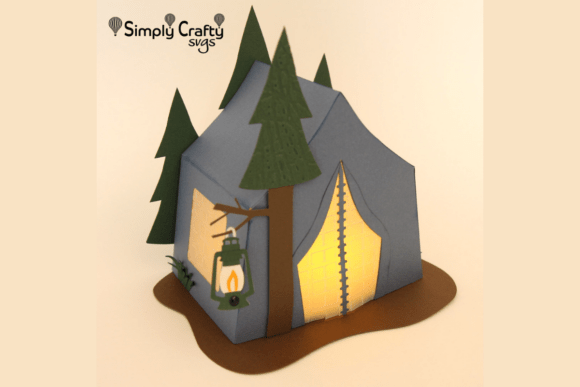
Upon opening the Tent Camping Box file, the immediate impression is one of rustic charm balanced with geometric precision. The aesthetic evokes nostalgia, making it an instant candidate for personalized gifts and boutique merchandise. Unlike standard flat machine embroidery designs, this project relies heavily on accurate cutting lines and fold scores. As a reviewer, I look for clean nodes and logical layering in the digital embroidery file. If the cut lines are jagged or the score lines are too deep, the final assembly will fail regardless of how beautiful the stitch work is.
The visual personality of this design leans towards wholesome and adventurous. It naturally belongs on items that celebrate the outdoors. In my assessment, this isn't a design for high-fashion apparel; rather, it is a specialized asset for holiday embroidery, glamping accessories, or commemorative keepsakes. The layout suggests it would pair beautifully with natural linen textures or kraft paper bases, reinforcing that organic, handcrafted feel that buyers currently crave.
Real-World Application: From Screen to Stitch
To truly evaluate this embroidery project, I simulated a production run for a custom order. Imagine preparing a personalized luminary as a Father S Day gift for a client who loves national parks. In this scenario, the Tent Camping Box serves as the centerpiece. The success of such a finished product depends entirely on registration. When stitching onto cardstock or heavy canvas for a 3D object, there is zero margin for error. I found that treating this like a traditional applique design helps manage expectations; you are essentially appliqueing structure onto a base material.
For small shop products, versatility is key. While the primary description highlights the box form, elements of this design could be adapted for tote bag designs or sweatshirt embroidery if the user isolates specific motifs. However, as a complete unit, it shines brightest in home decor. I can envision this being used by apparel decorators expanding into lifestyle goods, or creative entrepreneurs creating matching sets of camping gear tags and storage boxes. The value proposition here is high because 3D embroidered items have a perceived worth far exceeding flat patches.
Critical Considerations for Material and Hoop Size
While the Tent Camping Box is charming, it demands respect regarding materials. You cannot simply hoop this up without planning. Because this is often intended for structural items, stabilizer choice is non-negotiable. Using a tear-away on a project that needs to stand upright will result in collapse. I strongly advise testing with heavy-duty cut-away or specialized craft stabilizers designed for 3D objects. Furthermore, check your hoop size compatibility before purchasing. 3D box designs often require larger fields to accommodate fold-over tabs and glue flaps. If you attempt to resize this down significantly to fit a smaller hoop, you risk distorting the geometry, rendering the box unassemblable.
Fabric texture also plays a massive role. Smooth, tightly woven fabrics or specialty papers yield the best results for the box itself. Avoid highly textured terry cloth or loose-weave burlap for the structural panels, as the running stitch fold lines may get lost, and the satin stitch borders might sink in. Conversely, if you are adapting the tent motif for baby embroidery on a blanket, you must adjust the stitch density. The original file optimized for cardstock or canvas will be too dense and stiff for baby knits, potentially causing puckering or safety issues.
Design Performance Across Different Products
When considering where to use the Tent Camping Box, context matters. For commercial embroidery ventures selling at craft fairs, this design is a showstopper because it demonstrates technical skill. Customers trust sellers who can execute complex 3D structures. However, I would caution against using this specific box file for curved surfaces like caps. The geometry is rigid; forcing it onto a curved brim will distort the perspective. Stick to flat substrates for the box construction.
For custom apparel, extract the decorative elements rather than the structural ones. A full 3D box design is inappropriate for a t-shirt chest placement due to weight and washability. Instead, utilize the tent iconography as a standalone embroidered patch or pocket detail. Always consider the lifecycle of the item. Luminaries and decor pieces are low-wash, allowing for more delicate thread colors and metallic accents. Wearables require robust fill stitch patterns that withstand laundering. If you are an Etsy seller, clearly distinguishing between "decor only" and "wearable safe" versions of this design in your listings will prevent customer dissatisfaction.
Professional Notes for Makers and Sellers
Before listing any small shop product featuring the Tent Camping Box, conduct a thorough audit. First, always test the design on scrap material identical to your final substrate. Verify that the fold lines actually fold cleanly and that the glue tabs align perfectly. Second, review your licensing. Ensure you have the right to sell physical items made from this 3D SVG, especially if you plan to scale production. Third, create accurate printable mockups or photograph your prototype in natural light. Digital renders rarely capture the tactile depth of embroidery, and buyers need to see the actual stitch quality to trust the design assets.
- Test Stitch Density: Confirm the design isn't too dense for your chosen paper or fabric to prevent tearing along perforation lines.
- Thread Contrast: Use high-contrast threads for score lines to ensure visibility during assembly, even if they will be hidden later.
- Needle Selection: Use sharp needles for cardstock/paper to ensure clean cuts, and ballpoint or universal needles if adapting for fabric.
- Color Fastness: If making luminaries that will hold lights, ensure threads are heat-resistant and colorfast to prevent bleeding or melting.
- Assembly Instructions: If selling the finished box, include care instructions. If selling the file, provide clear assembly guidance to reduce support requests.
Final Verdict on Value and Versatility
The Tent Camping Box is more than just a seasonal novelty; it is a robust test of a maker's technical proficiency. For the experienced embroiderer, it offers a satisfying challenge and a high-value product for Father S Day or outdoor enthusiasts. For beginners, it serves as an excellent educational tool for understanding 3D construction and registration. Its strength lies in its ability to transform flat thread into architectural form. By respecting the material constraints and adapting the design intelligently for different substrates, creative entrepreneurs can turn this embroidery file into a signature offering that stands out in a crowded marketplace. Just remember: in 3D embroidery, precision is not optional—it is the foundation of the entire finished product.